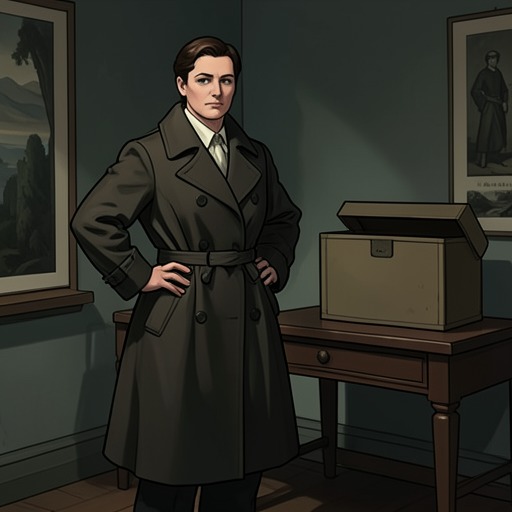
Kate Changes Her Mind and Decides to Accept the Inheritance
Slow BurnKate Changes Her Mind and Decides to Accept the Inheritance marks a turn in Kate MacKenna’s response to Compton Thomas MacKenna’s $80 million estate: she first rejects it outright, then takes the estate binder after overhearing her cousins’ celebration and their insult to her mother. The change is not presented as a simple calculation about money. The estate could address urgent practical needs, but the immediate trigger for Kate’s reversal is the contempt she hears directed at her family.
The Offer and Kate’s Refusal
Before answering, Kate’s thoughts circle around the consequences of accepting the money. It could save her company, pay Isabel’s tuition, and allow the family to keep the house; she briefly recognizes the inheritance as a possible answer to her problems. Yet she stands and tells Anderson Samuel Smith, “I don't want it.” When Anderson explains the planned transfer, she repeats her refusal: “I don't want it. Any of it.” The scale of the offer and its potential practical benefits therefore sharpen rather than settle the conflict. Kate understands what the money might do for her, but initially rejects the inheritance itself.
Anderson describes Compton’s arrangements as meticulously planned. He places a thick accounting-firm binder on his desk, gives it to Kate to review, and explains that Compton wanted her to understand and appreciate what he had accomplished. The proposed next step is specific: Kate is to return the following day at three p.m. to meet financial advisers, who can answer questions and assist with the transition. The binder makes the inheritance concrete, while the scheduled meeting gives Kate time to reconsider. When someone asks whether refusal would send the estate to the brothers’ next of kin, Anderson does not answer; he instead tells Kate she has until the next day to think it over.
Kate does not accept that delay as a reason to soften her answer. She says calmly, “That won't be necessary. I will not accept the inheritance. I want nothing from that man.” Dylan Buchanan stands beside her in case one of the brothers approaches too closely, but Kate is the person directing the exchange. Her declaration turns the meeting from an explanation of Compton’s plan into a contest over whether she will be pressured by the relatives around her. Dylan is impressed by her composure and refusal to be intimidated.
The Moment That Changes Her Mind
Vanessa MacKenna urges Kate to consider Compton’s wishes before giving the inheritance away. Her appeal does not immediately change Kate’s mind: Kate leaves the room without the binder. In the outer office, she speaks with Anderson about how difficult it will be to explain the encounter to her sisters and starts to leave with Dylan. Then she remembers the disk she has forgotten and turns back to retrieve it.
That small return changes what Kate knows. Before reaching the doorknob, she hears laughter and glasses clinking as the brothers celebrate. Their joking includes a slight against her family. Kate listens only briefly, but hears enough to understand the character of the celebration. The scene sets the brothers’ private contempt against the formal inheritance process that has just asked her to consider Compton’s wishes. The insult supplies a new reason to reconsider: refusing the estate would not erase the relatives’ disdain for her mother or family.
Kate opens the door and walks back into the room. The laughter stops. She does not look at her cousins; she picks up the disk, then reaches for the binder on Anderson’s desk. When Roger MacKenna demands to know what she is doing, she answers, “You've changed my mind. I'll be needing this after all.” The reversal is made visible through objects and action: the disk brings her back, and the binder—the document she had refused to take—now rests against her chest as she leaves.
A Reversal on Kate’s Terms
Kate’s new decision follows the cousins’ mockery, but she does not explain it to them or ask their permission. Instead, she takes the binder and walks toward Dylan, who has been waiting at the door. Her restraint is part of the reversal: she changes course decisively without allowing the brothers’ demand to dictate how she presents that choice. The inheritance becomes something she will examine, not something she must accept on her cousins’ terms.
As the door closes, Kate looks over her shoulder and says, “Oh, don't let me interrupt you, cousins. Please. Carry on. One of you was just calling my mother a whore.” Her parting remark identifies the insult she overheard and exposes the contrast between the family’s formal discussion of Compton’s estate and the contemptuous talk behind the door. She leaves with the binder, making her change of mind public while refusing to conceal its immediate context.
Consequences and Significance
The scene establishes that Kate’s first refusal is not her final decision. The binder, intended to prepare her for a meeting with financial advisers, becomes the tangible sign of that change. The evidence here shows her taking it and saying she will need it after all; it does not show the transfer being completed or the advisers’ meeting taking place. The distinction matters: the event records a decision to reconsider and proceed, not the later mechanics of the inheritance.
For Kate, the reversal joins financial necessity to family dignity. The estate could help protect her company, Isabel’s education, and the family home, yet those benefits had not overcome her aversion to taking money from Compton. Hearing her mother disparaged changes the balance. Kate’s exit keeps both motives in view: she takes the means to examine the inheritance, while naming the insult that made her turn back. As Kate and Dylan cross the lobby, he asks what happened; the scene closes on his question, leaving her explanation beyond this moment.